

Today I was working on something and planned to talk about something completely different, but then the WSJ dropped this bombshell: “OpenAI Misses Key Revenue, User Targets in High-Stakes Sprint Toward IPO”. I am pretty sure nobody expected to read something like this today, especially ahead of hyperscalers’ earnings due in a few days. I’d love to see the faces of Jensen Huang and wannabe Jensens while reading this specific sentence from the WSJ article: “The company’s CFO and board have questioned the wisdom of massive data-center spending in the face of slowing growth”. Any market reaction so far? Guess what: ZERO.
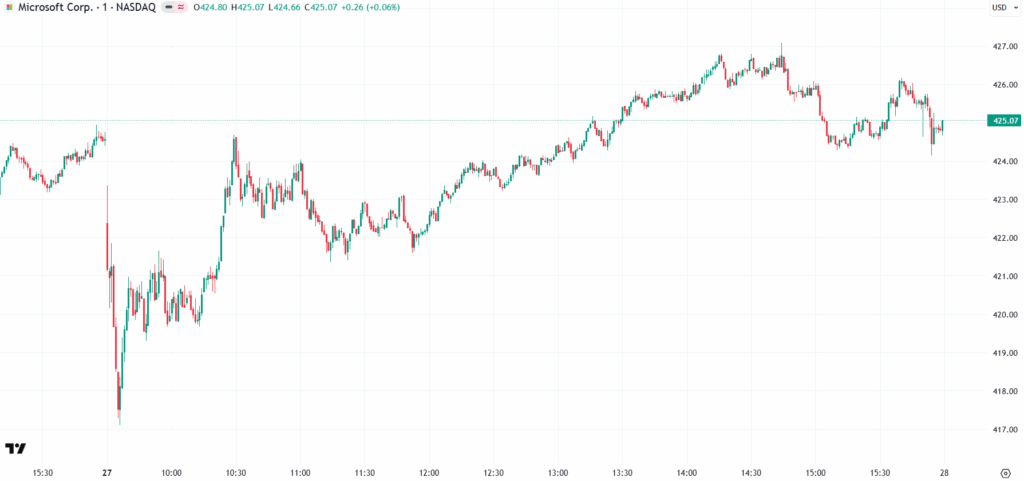
This is the perfect example of what I warned about last week in “WHY YOU CANNOT SHORT THIS MARKET, EVEN WITH THE MIDDLE EAST ON FIRE”: traders and investors simply don’t care about fundamentals whatsoever anymore. As long as stocks keep going up, everything is awesome, and nothing can change that until something, eventually, hits the brick wall in the real world. Did OpenAI just hit a brick wall? No, not yet, but it surely is getting dangerously close to that. It should not come as a surprise that its biggest sponsor, Microsoft, has been working to distance itself more and more from the OpenAI sinking ship. Microsoft decision to cut OpenAI revenue share in a fresh step to loosen their AI alliance is not bullish at all for either of the two companies. Surely Microsoft is going to suffer a great loss when OpenAI ultimately implodes, but guess what? Investors are so bullish and deaf to any warning sign that, even if Microsoft shares opened on Monday down 5%, the dip was bought hard and the price ended up closing the day flat.
This is what I said back in October: “THE DATA CENTERS FRENZY WILL BE REMEMBERED AS THE LARGEST WASTE OF CAPITAL IN HISTORY”. Logically speaking:
- Now that it is no longer speculation that OpenAI is struggling to grow revenues
- that it will be nearly impossible to raise more capital with a valuation already above USD 800 billion
- and the real cash it is going to get from its latest jumbo USD 120 billion round is eventually going to be just a fraction of the total commitment, especially when SoftBank is struggling to close its USD 40 billion bridge loan to fund the latest commitment (great catch from Ed Zitron here), to the point it had to attempt to raise USD 10 billion by pledging the very same OpenAI shares as collateral (”SoftBank seeks $10 billion margin loan backed by OpenAI shares”)
- You may expect all those companies, from hyperscalers to Oracle and neoclouds, that bet hard on building infrastructure to accommodate OpenAI’s projected demand, will suffer.
Nope, not at all. All these players have already been busy recycling their contracts to other players like Anthropic and Meta, which still won’t be able to pay for that compute with the revenues from their AI business. But until this becomes factual news on outlets like the WSJ, nobody will surely care:
- Anthropic says Google to pump $40 bn into AI startup
- Anthropic, Amazon Tighten Bond in $5 Billion Investment and Computing Deal
- CoreWeave Announces Multi-Year Agreement With Anthropic
- Anthropic looks to hire six-figure role for negotiating data center deals to fuel Europe AI expansion
- Microsoft to integrate Anthropic’s Mythos into its security development program
- Anthropic plans $50bn US data center spend, starting with Fluidstack sites in Texas and New York
- Meta commits to spending additional $21 billion with CoreWeave as AI costs keep rising
The move is pretty obvious here. All these players are rushing to Anthropic for one simple reason: to avoid write-offs on their infrastructure spending in the event they cannot bill customers’ revenues, even if those revenues, more often than not, are just credit spend and not really paid in cash, as I explained a long time ago in: “THE SMOKING GUN THAT PROVES HOW OPENAI IS MICROSOFT’S REVENUES LAUNDROMAT”.
Everyone knows how little I believe in coincidences, and another huge coincidence just happened in the past 24 hours:
What’s going on here? To be honest, I couldn’t resist fetching a very old event from 24 years ago that is so damn similar: “As the Enron Inquiry Intensifies, Midlevel Players Face Spotlight.”
The point is not that OpenAI is about to become Enron tomorrow. The point is that every bubble ends the same way: first the story breaks, then the numbers miss, then the accounting people start quietly leaving the room, and only then does the market admit that demand was overstated and capital was misallocated. If the WSJ report is even half right, we are past the “price discovery” phase and deep into the “narrative maintenance” phase. Infrastructure has been built, contracts are being recycled, valuations are being defended, and everyone is hoping the next quarter buys them one more quarter. That works until it doesn’t. When the marginal buyer finally asks a simple question, “Who is actually paying cash for all this compute infrastructure?”, the entire chain of assumptions snaps at once. And at that point, it won’t matter how bullish the tape was the day the warning signs appeared. It will only matter that they were there, in plain sight.