
This is what I wrote about 3 weeks ago in “NVIDIA IS NOW VERY CLOSE TO HITTING THE CIRCULAR FINANCING BRICK WALL”:
“Personally, I would not even be shocked if, in several months, Nvidia surprises the market and tries to raise significant amounts of debt via bond issuances, like other hyperscalers such as Google, Amazon, or Oracle have already been forced to do in order to persist with their unrealistic Capex plans, praying the biblical amount of AI revenues they dream about finally materialise and they can finally start to recover the hundreds of billions of dollars they have spent so far”
When, on Monday, I read the headline “Nvidia to raise $25 billion, sources say, in first corporate bond sale in five years”, the thought that immediately came into my mind was “wow, things might be even worse than I thought”.
In the past 3 years, I covered Nvidia and its AI bandwagon extensively (archive), and especially how cash was spun around among them to fabricate revenues and give the false impression of spectacular growth in the sector. While all these people thought the cash available to them to fund their multiple trillion-dollar ambitions was guaranteed, they are now discovering that, as I warned, not only does cash not grow on trees, but investors won’t wait forever before seeing tangible returns on their investments. Hey Dario, what are you talking about, man? Haven’t you seen the stock prices of Nvidia, Microsoft, or the valuations of Anthropic or OpenAI? Yes, I did, but that’s not the money I am talking about. First of all, investors trading shares in the open market exchange money between each other; not a penny goes into the company coffers unless they issue new shares, as Alphabet just did (“ALPHABET EQUITY RAISE: A BOLD MOVE OR A GIANT MISTAKE?”). Those investors are placing a bet on a company while someone else is cashing it out. When a company is still private, like OpenAI or Anthropic, most of the shares investors purchase are newly issued by the company, and when they are large enough, or demand is particularly strong, a private secondary market becomes available. As a matter of fact, OpenAI and some early investors already cashed out more than 14 billion $ worth of shares even before the company goes IPO (I see near zero chances this happens in our lifetime).
The cash these companies can absorb isn’t infinite; Venture Capital is nearly exhausted, Private Equity too. Private Credit is still alive and kicking, but for how long is anyone’s guess. Bank lenders, after briefly venturing into the space, decided it was too spicy for them to digest, especially when high-quality liquid collateral to guarantee borrowings is very limited. This means that what’s left available to Jensen and his buoys to keep mopping up cash they can spin around themselves to keep feeding the illusion that the whole AI sector’s spectacular growth is continuing are the equity and bond open market. What happens when the cash dries up from there too? If by that time the whole AI business doesn’t make a meaningful amount of real revenues, then it’s GAME OVER.
The reason why companies generally do not like to issue equity and bonds directly in the open market is that they have to provide more detailed disclosure about their activities, meaning the room for accounting cheating is more limited. There are exceptions, though, like the ones used by Nvidia in this latest bond offering, where the company provides absolutely ZERO additional information on its activities and accounts. As a result, the sale of these notes will be fully restricted or very limited in any market across the globe except the United States because it is not in compliance with disclosures from Europe to Hong Kong, from Switzerland to even the Middle East states. This is all you see as disclosures
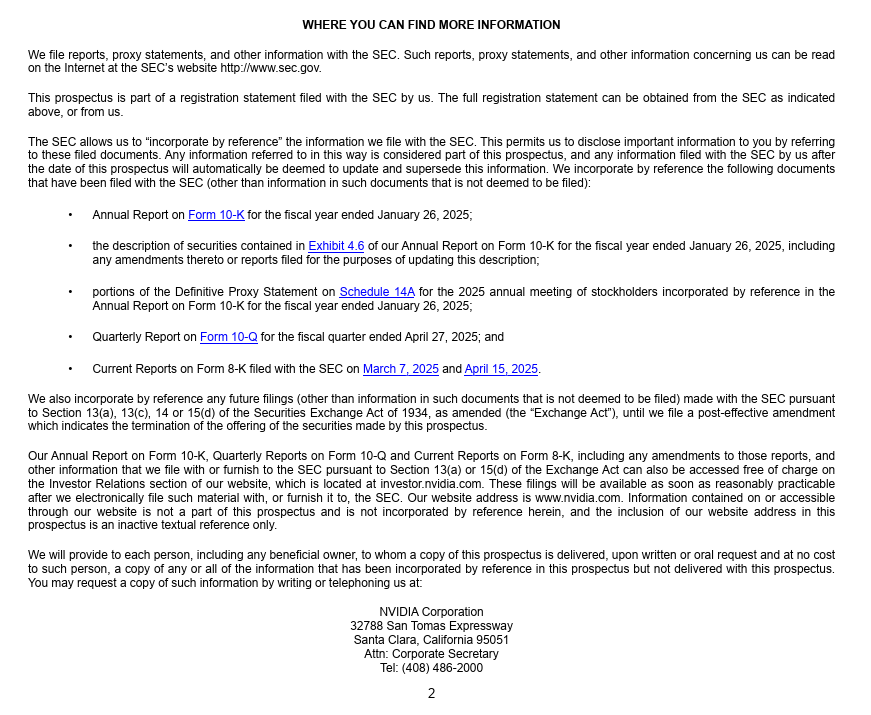
And the “Use Of Proceeds” section is even more incredible, in my opinion, since it basically says “just give me the cash, no questions to be asked”.

In a nutshell, Nvidia can still enjoy blind trust from investors, who apparently placed more than $ 85 billion in orders for $ 20-25 billion in bonds offered. Why no one asks the simple question “why a company with no industrial operation, enjoying 70% revenue margins, sitting on over $ 50 billion in cash and equivalents, and without any heavy capex plans different from other hyperscalers is raising debt in the market while it should be printing more money than the FED does?” is something I find quite incredible.
In the end, this Nvidia bond deal is not “just” a funding event; it is a stress test of how long the market is willing to suspend disbelief. When a company that claims to sit on mountains of cash and margins resorts to raising tens of billions in opaque paper, the right question is not whether investors can absorb the issuance, but why the issuance is needed at all. If the AI boom is as real and as profitable as advertised, cash flows should soon make this kind of manoeuvre unnecessary; if it isn’t, then what we are watching is the slow migration from hype financed by venture money to hype financed by public creditors. And history is very clear on who ends up paying when that transition reaches its limit.