
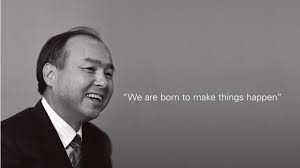
By now, it is an open secret that OpenAI is quickly running out of cash and is in desperate need of funding. SoftBank’s latest earnings report shows that OpenAI has few alternatives other than SoftBank paying for the second tranche of the $40 billion it committed to invest in the AI company earlier this year. As I explained in “OPENAI: LITTLE CASH, BUT PLENTY OF PROMISES, IN AN EFFORT TO AVOID BANKRUPTCY,” the company badly needed SoftBank to fulfill its promise, and it should not come as a surprise to see SoftBank desperately trying to find the cash to do so, also to salvage the money already invested in OpenAI and on the whole over hyped AI narrative. This is consistent with what I flagged back in May (“SOFTBANK GOES ALL IN ON AI WITH THE LITTLE MONEY IT HAS LEFT“).
Now the question on everyone’s mind should be: how is SoftBank going to put together the $30 billion committed for the second OpenAI investment tranche to fulfill its promise to Sam Altman? The answer lies in its latest earnings report, where SoftBank detailed a very large asset monetization in the last quarter:
- 40.2 million T-Mobile shares sold for $9.17 billion between June and September 2025.
- $2.37 billion in proceeds was generated from the settlement of collar transactions using Deutsche Telekom shares and the partial sale of Deutsche Telekom shares held.
- 32.1 million shares of NVIDIA (including those held by the asset management subsidiary) were sold for $5.83 billion in October 2025. Yes, SoftBank sold ALL its Nvidia shares.
- In November 2025, the terms of the margin loan using ARM shares were amended, including an increase in the facility amount from $13.5 billion to $20.0 billion. As of November 11, 2025, $11.5 billion of the facility remains undrawn.
Putting it all together, SoftBank raised $17.37 billion from selling assets and has an $11.5 billion revolving credit facility against its ARM shares it can use. The total firepower now available? $28.87 billion.
As of the end of September, SoftBank reported a total consolidated Cash & Cash Equivalent position of approximately $32 billion; however, this figure can be misleading for two reasons.
Reason 1: 30% of the cash is held by SoftBank OpCo subsidiaries and cannot be diverted to investments because of operational reasons; this means that only approximately $22.5 billion of cash is available to pay for the OpenAI investment.

Will SoftBank then use its revolving credit facility against ARM shares? That would be a very dangerous move because it would leave SoftBank with a tiny cash buffer to repay the mountain of short-term debt due to expire soon that it needs to refinance (more on this shortly). As a consequence, SoftBank has already syndicated away $7.5 billion of its $30 billion commitment in OpenAI’s second investment tranche.

Reason 2: SoftBank has a huge amount of debt maturing in the next 12 months that it needs to repay or refinance, approximately $41.5 billion.

Needless to say, if SoftBank closes the second investment tranche in OpenAI by December 2025 as they plan, they will literally be betting the entire company on the fate of OpenAI down to the last available penny.
Considering all that happened in the past week with OpenAI now openly seeking government support to sustain the $1.4 trillion of commitments it made to suppliers in the past few months, I believe that SoftBank’s chances of turning a big profit by investing in OpenAI are not only remote, but by all means, it might not be able to survive an OpenAI implosion. Why? Because SoftBank’s equity is positive only thanks to the unrealized capital gains and inflated valuations of the Vision Fund Investments, its ARM, SoftBank Corp, PayPay, and other subsidiaries, most of which have been used as collateral to raise debt. Considering this, it should not come as a surprise at all that S&P is rating SoftBank’s senior debt as BB+ and subordinated debt as B+, which is junk bond territory:
- SoftBank Group Corp.’s Hybrid Issuance Rated ‘B+’ And Assessed As Having Intermediate Equity Content
- SoftBank Group ‘BB+’ Ratings Affirmed Despite Accelerating AI Investments
What I find even more incredible is that, in order to deliver a massive analyst expectations beat this quarter (SoftBank profit more than doubles to $16.6 billion on OpenAI gains), and hide the true extent of its desperation, SoftBank literally fabricated OpenAI capital gains out of thin air. Here is how they did it in their own words:
- In March 2025, SBG entered into a definitive agreement with OpenAI to make follow-on investments in OpenAI Global of up to $40.0 billion (SBG’s effective investment amount is expected to be $30.0 billion, after deducting $10.0 billion to be syndicated to co-investors).
- The first closing of $10.0 billion was completed in the first quarter, with $2.5 billion of this being syndicated to co-investors and the remaining $7.5 billion being invested by SVF2.
- Including the $2.5 billion syndicated at the first closing, the entire $10.0 billion syndication to co-investors was committed to by such co-investors by the second quarter-end.
- In September 2025, SVF2 was designated as the investment entity for the second closing, and the right to make a follow-on investment in OpenAI (which constitutes a forward contract, the “OpenAI Forward Contract”) was transferred from SBG to SVF2.
- In October 2025, following the second quarter-end, SBG elected to invest an additional $22.5 billion through SVF2 at the second closing in December 2025.
In a nutshell, SoftBank Group transferred the “right” to invest in OpenAI to Vision Fund 2, where 96% of the committed capital belongs to SoftBank Group itself. In doing so, SoftBank Group “created” a forward agreement between itself and its own fund that, let’s not forget, hasn’t yet invested an additional $22.5 billion in OpenAI at the $300 billion valuation agreed in March 2025. However, this derivative forward contract allowed SoftBank to already report an $8 billion capital gain PRIOR TO CLOSING THE INVESTMENT, marking the value of its holdings at the most recent $500 billion valuation at which OpenAI employees sold investors their private shares (OpenAI wraps $6.6 billion share sale at $500 billion valuation). This is already an incredible stretch, but what’s even more ridiculous is that SoftBank was among the investors who purchased shares from OpenAI employees at the $500 billion valuation, effectively contributing to inflating the price of its own investment.

Is all I described legal? According to IFRS standards, it should be. However, it is one of those very borderline cases where the line between accounting rules and creative accounting is not well defined. For sure, we can all agree that SoftBank is increasingly using accounting acrobatics to portray a much different picture of its business than the reality. A reality where SoftBank is going all-in and with leverage in OpenAI, a company that is objectively doomed to implode without a public bailout, exposing itself to the possibility of going under, along with the jewel in the crown of its asset portfolio, in what is effectively a kamikaze bet.
SYNNAX PROMO
Get exclusive intelligence on stocks you can’t find anywhere else – insights that could give you a serious edge. Claim your free Synnax trial month now: https://synnax.app/PROMO/JUSTDARIO